SHOPPING
year
2021-2023
TOOLS
Figma, user testing, ux labs
team
solo designer (PDP)
+ 1 DESIGNER (SHOPPING UNIFICATION)
project context
Shopping is one of Bing's key revenue drivers. But lasting growth depends on more than monetization. It depends on earning user trust by helping people find products and decide faster.
At the same time, shopping experiences across Microsoft had evolved independently. The result was fragmented interactions and inconsistent patterns, so users had to relearn how things worked on every product and surface.
my role
My role was to build a shared shopping framework that earns trust and feels familiar everywhere. the experience strategies focused on balancing user intent with business goals, helping users confidently discover, compare, evaluate, and purchase products while thoughtfully integrating monetization in ways that enhanced—rather than interrupted—the shopping journey.
The PDP design gained >5% in engagement and 4% in revenue and 6 different shopping canvas experience were unified to 1.
Shopping answer engagement grew engagment to ~10x
PROJECTS & impact
01
PDP re-design
Projects: PDP re-design that scales across 6 canvases, 2 devices and multiple data points
My Role:
Top-of-page optimization, component design across 6 shopping canvases, responsive design for mobile and desktop, contributions to the shopping design HIG, accessibility
Impact:
Shipped new PDP design with gain in >5% (not actual value) gain in engagement and 4% gain in revenue
02
Shopping unification
Projects: Unification component design
My Role:
Worked with team in Redmond for building standardized components for shopping on Microsoft, led the efforts for one PDP design that would scale to all canvases.
Impact:
Shopping follows the same language across Bing, Edge, Mobile, Buy Direct, Deals page and MSN
03
Shopping answer on SERP
Projects: SSA redesign
My Role:
understanding the ranking logic behind results, exploring UI at the component level, Exploring interaction patterns, Designing for consistency with Bing's design system
Impact:
FCDAU went up by 10x
04
Misc
Project: Pitch concept for shopping;
Icon and Illustration
My Role:
I assembled a team for a hackathon to explore one question: what if AI could help people style themselves better, and find the products that complete their look
Impact:
Won best presentation in Shopping Hack 2023
My illustrations were shortlisted in the top 10 out of all global submissions to help shape the future illustration style for Bing Icon and Illustration language.
PROJECT 01
PDP re-design
Help shoppers quickly decide what to buy, where to buy it, and when, by bringing every option together in one trustworthy view, with monetization that supports the decision rather than distracting from it.
PDP Redesign + Shopping Unification
"As a shopper, I want to evaluate whether a shoe is the best fit for my needs and purchase it at the best available price, so that I can make a confident buying decision and get the best value for my money"


Design Scalability
Dynamic layout to accomodate the least data to most-data scenario


the brief
Business goals
pdp is the bread and butter of shopping. the goal was to Improve pDp as a differentiated shopping experience versus merchant pDp, Increase engagement and revenue through richer product details, conflation and enrichment and monetization flights.
Findings from UR + Engagement Audit
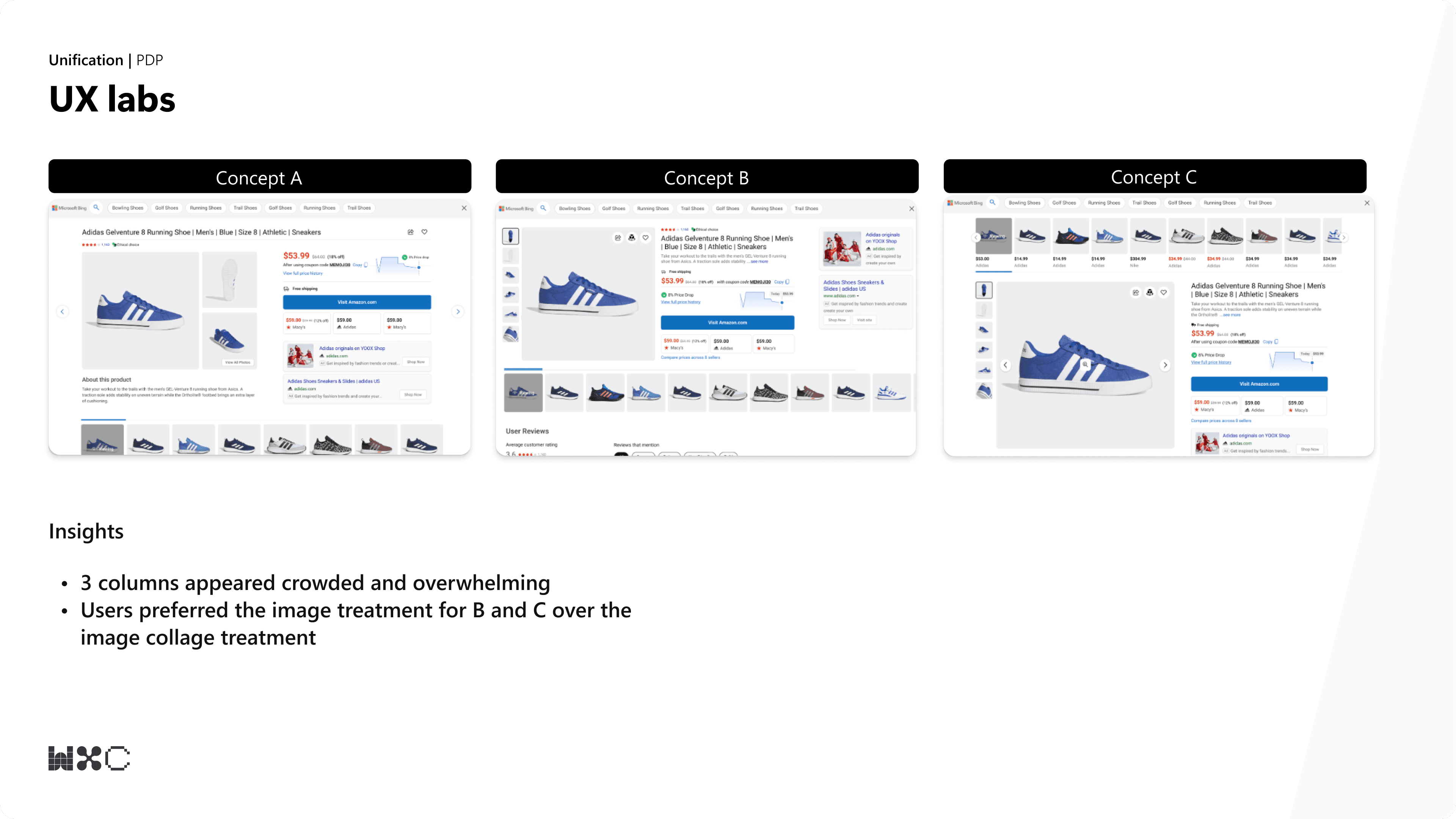
the production design of PDP was overwhelming with 3 column layout
Text ad coverage is low which WAS leading to poor revenue
having 3 rows of ads right below the bulld eye WAS reducing the traffic towards the sections below the fold
vertical product ad in pole position took up a big chunk of the top fold and pushed the content down, users were missing out on discovering the content below the page
engagement with the merchant site was low
The User goal
help users decide with confidence as quickly as possible, while making related products easy to explore.
Canvases where PDP existed
SERP hover, Buy direct, edge right pane, msn, mobile and desktop bing experience, deals day page
DESIGN PROCESS
Design process
helping ease the decision making
Shopping research showed that users arrive on a product page with three questions:Is this the right product? Does it meet my needs, and is there a better option for the price?
Where should I buy it? Which seller offers the lowest final price, and which one can I trust to deliver?
Should I buy now? Is this a good price, or is it likely to drop soon?
Every element on the page is placed to answer these questions in the order users ask them.
the goal decided the layout
Several layouts were explored, and the ones that did the most to build buyer confidence were kept. Ratings, reviews, and the real price after offers sit where buyers can see them without searching. Every version still meets the business goal of monetization without costing buyer trust. A/B testing then confirmed the final solution.top of the page optimizations
The top of a product page does most of the work. It's where the buying decision happens, and where users decide within seconds whether they trust the page. It's designed as a quick overview to help users decide: a summary of ratings, the best price, and a preview of other buying options. This was designed as a scalable card component that allowed for horizontal discovery and comparison. For users who want to know more, clear links lead to the full details below, including all offers, reviews, and price history.component level design
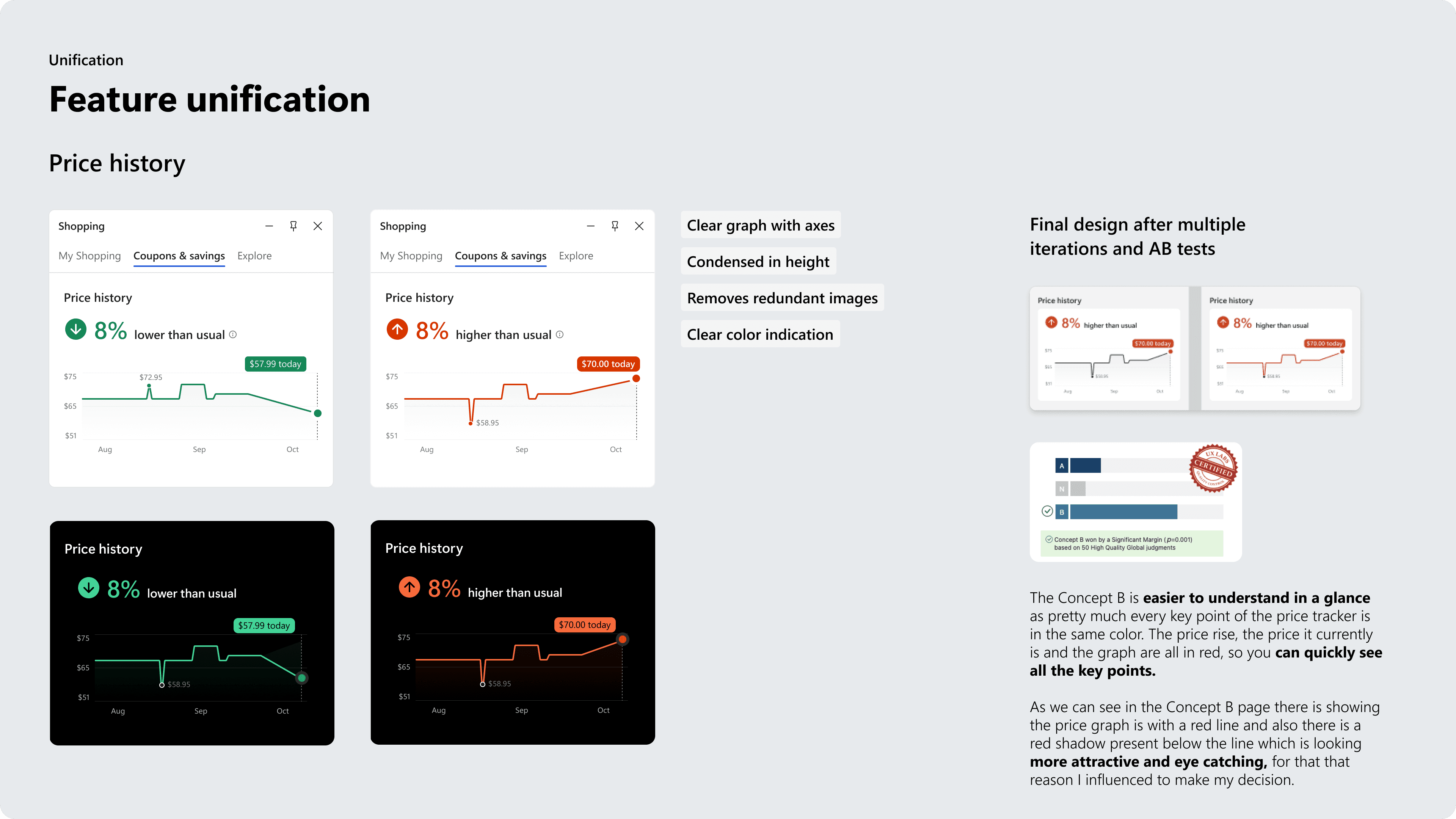
Each component, including the price graph, buying options chart, and ratings and reviews, was refined for layout, color, size, and type hierarchy, and designed to scale across screen sizes. Every component was A/B tested before being added to the shopping design hig. Mobile interactions were explored separately and added to the framework.
PROJECT 02
Shopping Unification
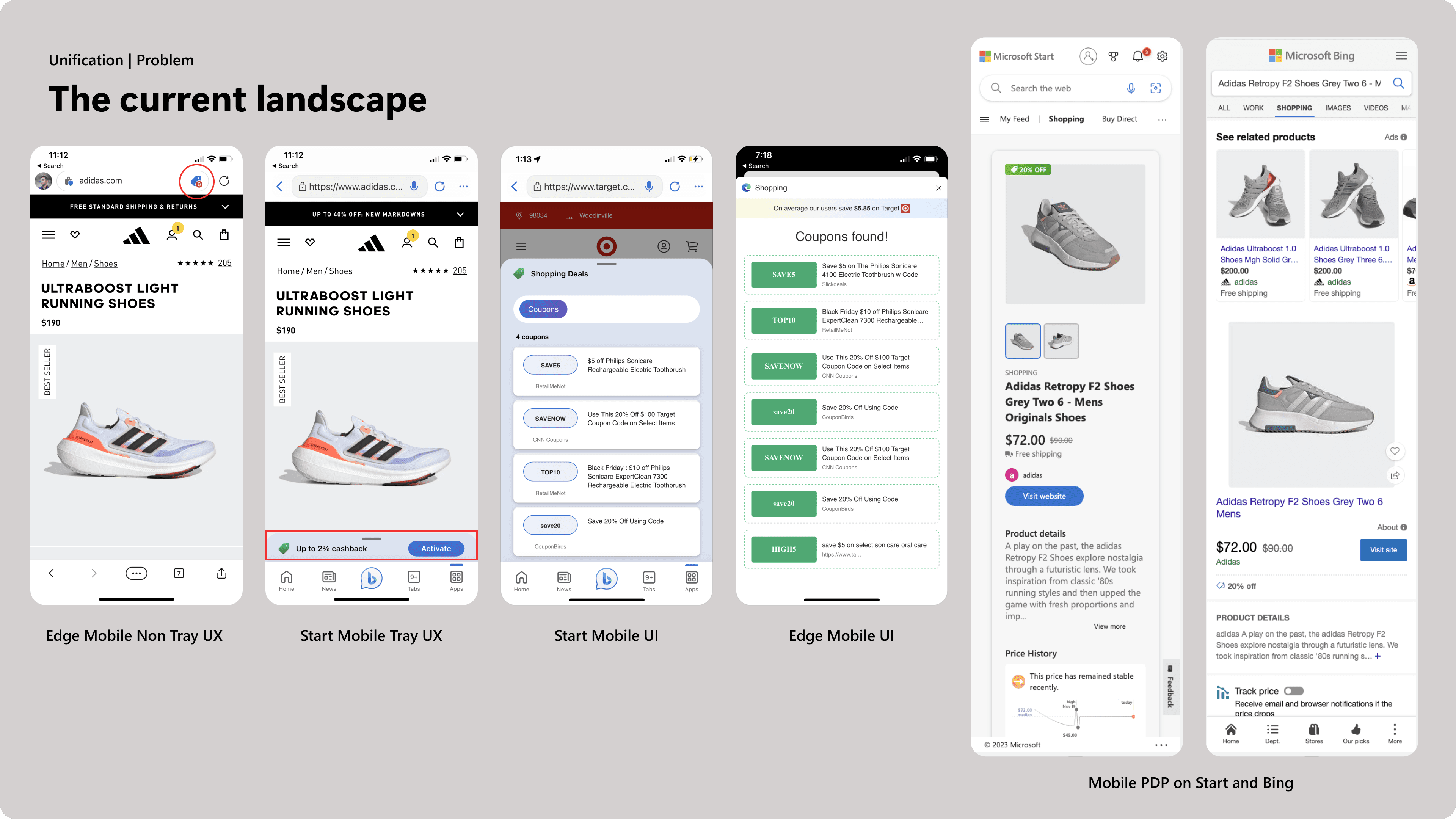
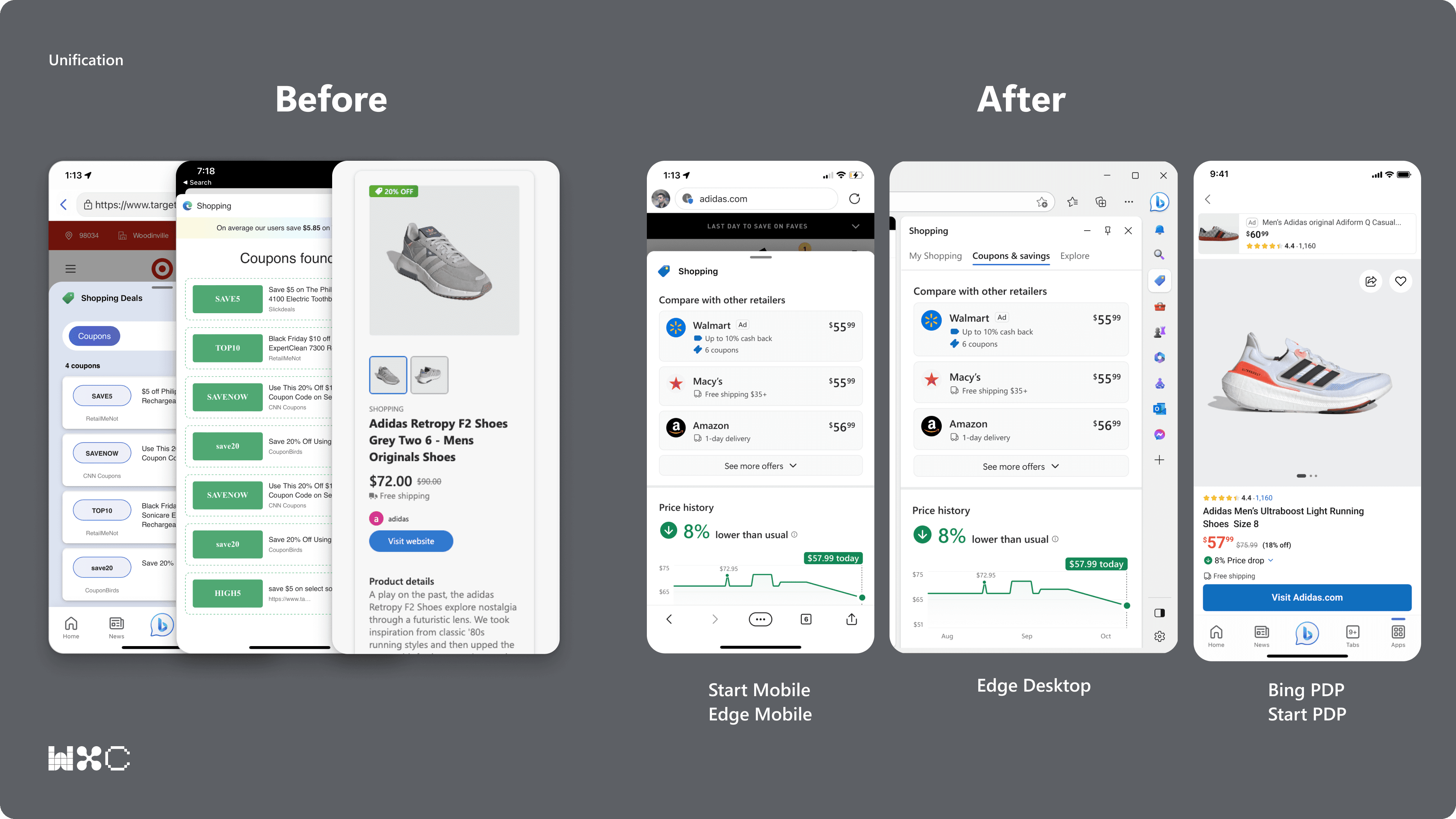
The goal was to bring six separate shopping canvases into one consistent experience, so shoppers can find, compare, and buy the same way on every Microsoft surface, without relearning how things work.
6 versions of Microsoft Shopping → 1 Unified Design
unification of shopping canvas






SHOPPING UNIFICATION
The Brief
Shopping on Bing was a fragmented experience (bing, edge shoreline, buy direct, msn, deals page) with multiple entry points leading users to product detail pages that looked and behaved differently. This inconsistency created unnecessary friction, requiring users to relearn interactions and features as they moved between experiences. More importantly, it made Shopping feel like a collection of disconnected products rather than one cohesive, recognizable experience.
My role
thE LAYOUT OF EACH PAGE ALSO VARIED AND SAME ELEMeNTS WERE REPRESENTED IN A DIFFERENT MANNER IN EACH PAGE. i worked with the cross-geo team to map the inconsistencies and built and tested each component on pdp that got added to shopping hig
collaborated with stakeholders working on other shopping canvases to incorporate the new PDP revamp design to ensure pdp is consistent across microsoft ecosystem
presented the final design to senior leadership
Impact
All Microsoft Shopping canvases now follow a consistent visual and interaction pattern, creating a more cohesive experience across entry points and surfaces
The reusable components developed for the Product Detail Page were incorporated into the Commerce HIG, establishing shared patterns that can scale across Shopping experiences and reduce design and development fragmentation.
PROJECT 03
Shopping answer on SERP
Enable meaningful discovery of products at the top of funnel to understand their options and arrive on the product page ready to decide.

The design approach
telemetry
telemetry helped understand where the users were clicking vs hovering vs scrolling awaylearning flights
ui experiments on changes in title, metadata (order and clour), size of cards etc, helped arrive at optimal design for the best resultsanswer framework
explored different layouts to optimize results and engagement while adhering to coherence guidelines
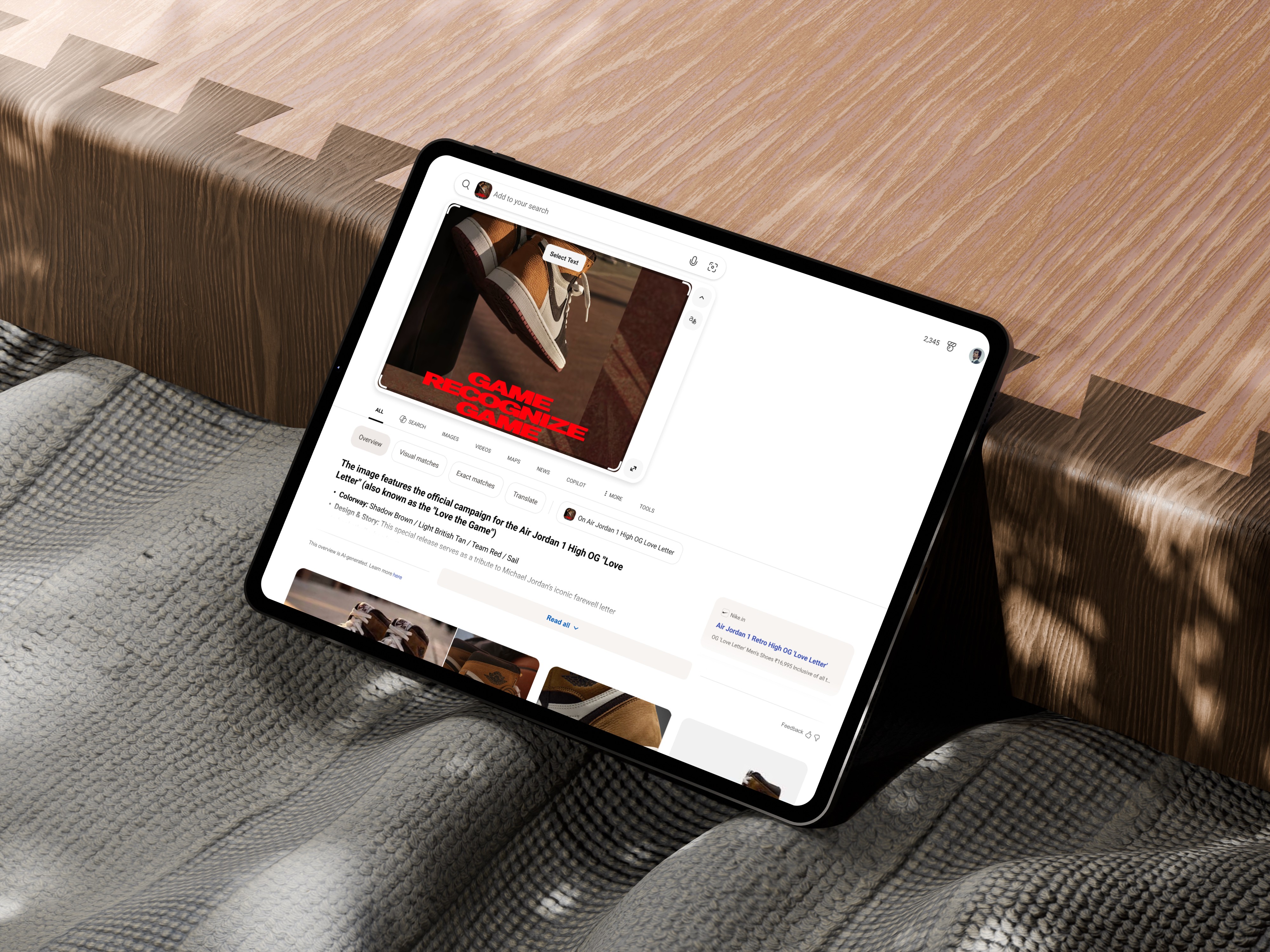
explored a pdp on hover to show on right rail
the impact
learning flights resulted in smaller increments -
the final design ux resulted in an increase in fcdau from
DAU growth ~10x
PROJECT 04
Misc
Hackathon project
"As someone who wants to look and feel more put-together, I want an AI assistant that suggests outfits based on my style, body, and the clothes I already own, so that I can dress with confidence and only buy pieces that improve my wardrobe."
Hackathon project
concept: whimsy, handdrawn illustration for msn cards